Osprey Talon vs Stratos 2026: Which Daypack Should You Buy?
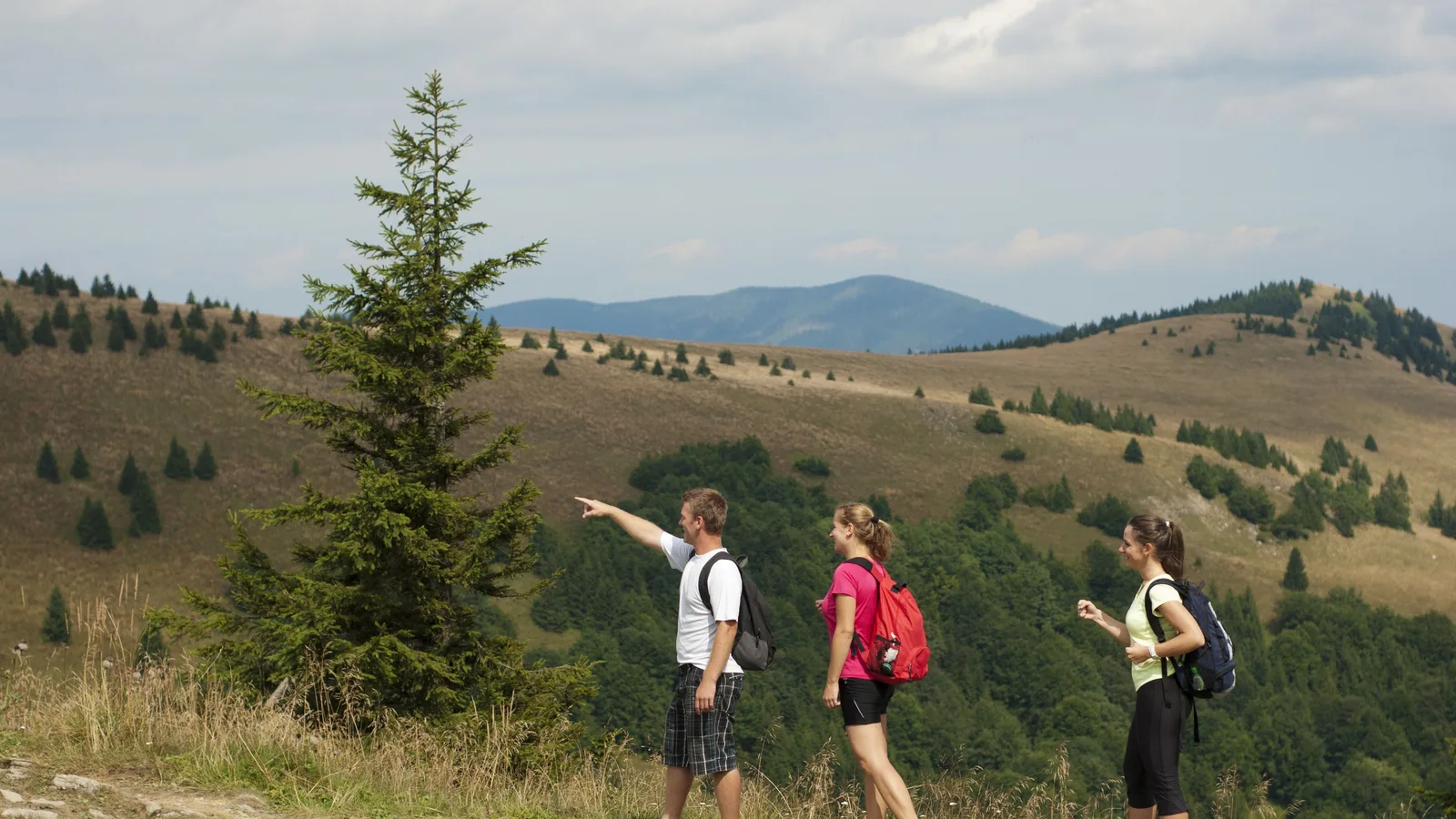
Talon or Stratos? We compare Osprey's two daypack families on back system, airflow, load carry and fit to help you pick the right one.
The verdict: the Talon is the better all-rounder
Both packs come from the same brand and the same brief — a streamlined daypack for covering ground — but they solve the problem in opposite ways. The Talon sits tight against your back. The Stratos holds the pack body away from it on a tensioned mesh. That one decision shapes everything else: weight, ventilation, how the pack behaves on a rough descent, and how much you can comfortably stuff inside before it starts to feel wrong.
Where the two ranges sit in Osprey's line-up
The Talon is Osprey's men's-fit lightweight daypack family; the women's-fit counterpart is the Tempest, which uses a shorter torso length with reshaped harness and hipbelt. The Stratos is the men's-fit ventilated daypack family, mirrored by the Sirrus for women. Both are sold across a spread of daypack volumes, from small summit packs up to bigger day-and-a-half sizes, so capacity is rarely the deciding factor — the back system is.
The naming trips people up. A Talon and a Stratos of nominally similar size are not interchangeable, and the women's versions are not the same pack in different colours: the harness, hipbelt and torso length are genuinely different, which matters more than most spec-sheet differences.
Talon vs Stratos: the head-to-head
| What matters | osprey talon | stratos |
|---|---|---|
| Back system | AirScape moulded foam panel with a mesh cover, worn flush against your back | AirSpeed tensioned mesh that suspends the pack body away from your spine |
| Airflow on hot climbs | Modest — you trade ventilation for stability | The clear winner, with a moving layer of air across your back |
| Weight on the hill | Lighter build with less padding and structure | More structure, more padding, so it feels heavier |
| Load stability | Better with a light-to-mid load on rough ground | Can sway when pushed past a normal day load |
| Packing and pockets | Streamlined: stretch front pocket, hipbelt pockets, simple main compartment | More compartments, a lid pocket and more places to organise small kit |
| Best conditions | Cool, changeable weather and fast days out | Warm weather, long summer days and heavy water carries |
| Typical use | Hillwalking, cycling, scrambling, travelling light | Hot-weather trekking and all-day comfort with a load |
Read that table as a set of trades rather than a scorecard. Every advantage on one side costs you something on the other, and which cost you can live with depends on where and how you walk.
Back panel: close carry versus suspended mesh
The Talon's AirScape back is a moulded foam panel under a mesh cover. It presses against your back, keeping the load close to your centre of gravity. That is why it feels planted when you are picking your way down a rocky step or pushing a bike up a track — and it is also why your shirt will be damp after a humid climb.
The Stratos uses AirSpeed: the mesh is tensioned across the frame so there is a gap between the pack and your spine. On a hot ascent the difference is obvious and genuinely comfortable. In a cold headwind the same gap can feel draughty, and the frame needed to hold the mesh out adds bulk and weight that you notice on a long day.
Load carry and packing
Ask yourself what actually goes in the pack on a typical day: waterproof, spare layer, flask, lunch, water, maybe a camera. In the Talon that kit goes into a simple main compartment with a stretchy front pocket for a shell and hipbelt pockets for snacks. It is quick to pack and quick to find things in, because there is less to search through.
The Stratos spreads the same kit across more pockets, with a lid compartment that keeps small items off the main load. If you like knowing exactly where your map, keys and gloves are, that structure is worth the extra weight. If you prefer one deep compartment and a couple of useful pockets, the Talon is less faff.
- Talon back system
- AirScape foam with mesh cover, close to the back
- Stratos back system
- AirSpeed suspended mesh with an air gap
- Women's Talon equivalent
- Tempest
- Women's Stratos equivalent
- Sirrus
- Volume options
- Both families are sold in several daypack sizes
Fit and sizing
Torso length decides which size you need, not your height. Both families use a wrap-around harness and a padded hipbelt, and both need the hipbelt sitting on the top of your hip bones, carrying most of the weight — if the load hangs off your shoulders, the size is wrong whatever the label says.
This is where the women's versions earn their place. The Tempest and Sirrus are not marketing variants: shorter torso options, narrower harness shaping and a differently angled hipbelt make a real difference for many walkers. Try the women's fit even if you have always bought from the men's range.
Choose the Osprey Talon if…
- You walk in British weather most of the year, where a warm back is less of a problem than a wobbling pack.
- You want the lightest pack that still carries a full day's kit properly.
- You mix walking with cycling, scrambling or travel and want one slim pack for all of it.
- You like a simple main compartment and hate hunting through pockets.
- You are shopping the Talon's women's-fit twin, the Tempest, and want the same logic applied.
The Talon rewards walkers who keep their day load sensible. Load it within reason and it disappears on your back; overload it and the lack of structure starts to show, simply because there is less frame and padding doing the work.
Choose the Osprey Stratos if…
- You run hot, walk in summer or travel to warmer places and want air moving across your back.
- Your day load is genuinely heavy — several litres of water, a camera kit, a proper lunch.
- You like pockets and organisation rather than one big sack.
- You want a pack that feels plush and supportive on a long, slow day rather than light and pared back.
- You are looking at the Sirrus, the women's-fit version of the same design.
The Stratos earns its weight when the day is long and warm. It is the pack you reach for on a summer traverse or a slow day with a heavy bag, not the one you grab for a quick evening circuit.
The final verdict
For most UK walkers, the Osprey Talon is the better buy. It is lighter, it carries closer to your back, it handles mixed weather without complaint and it doubles as a cycling or travel pack. The Stratos wins on ventilation and organisation, and those wins are real — but they only outweigh the Talon's advantages if heat and load are your two biggest problems.
If you are torn, be honest about your last five walks. If you finished them with a sweaty back and aching shoulders, the Stratos is the fix. If you finished them wishing the pack were lighter and less fussy, the Talon already answers the question.
Osprey Talon vs Stratos: common questions
Is the Osprey Talon the same as the Tempest?
No. Talon is the men's-fit version; Tempest is the women's-fit equivalent, with a shorter torso fit and different harness and hipbelt shaping. The Stratos has a women's counterpart too, the Sirrus.
Will the Talon's back panel leave me sweaty?
More than the Stratos will. The Talon sits flush against your back, so expect a damp shirt on a humid climb. That is the price of a more stable, closer carry.
Can either pack go in the cabin as hand luggage?
The smaller daypack sizes usually fit overhead lockers, but the larger ones will not. Check your airline's size and weight limits, and remember a full pack is deeper than an empty one.
Which is easier to organise around a camera insert?
The Stratos, generally. Its extra compartments and lid pocket let you separate small kit from the main load, and the structured back holds a cube in place better than a stripped-back sack.
Do I need to size a daypack by my height?
No — torso length is what the size charts use. Measure from the base of your neck to the top of your hip bones, then check the hipbelt sits on your hips and carries the weight.